
In the Shadow of the Plague is an environmental and family saga set in the Eugene area of Western Oregon. Delbert Killian is a hardy, opinionated, builder and landlord of seventy years who has a bisexual girlfriend half his age, is in the middle of divorcing his latest wife, and still chops his own firewood. Delbert has been designated executor of a distant relative’s trust, which consists of ten square miles of timber along the edge of the Willamette National Forest. He is instructed to get the land accepted into the National Forest, if possible; if not, to log it and distribute the proceeds among some twenty beneficiaries, who include most of Delbert’s extended family. The wife he is divorcing, Sandra, picks up the narrative in chapter 4, and thereafter Delbert narrates alternate chapters with Jason, one of his sons; with Laralee, Jason’s girlfriend; and with Herman, Sandra’s gangster boyfriend.
While the beneficiaries pressure Delbert to log the land and distribute the money, he develops a plan to help the residents of Blue Blood Creek, an unincorporated village located on trust land, to incorporate and buy their homes, which would in turn pay off debt that blocks the inclusion of the trust lands into the National Forest. A physical assault on Delbert leads into a subplot involving Herman and his enforcer, Tiny, who is inadvertently murdered. Delbert loses his girlfriend, Lucy, to his niece, Florence, a relationship he ultimately blesses by presiding over their marriage.
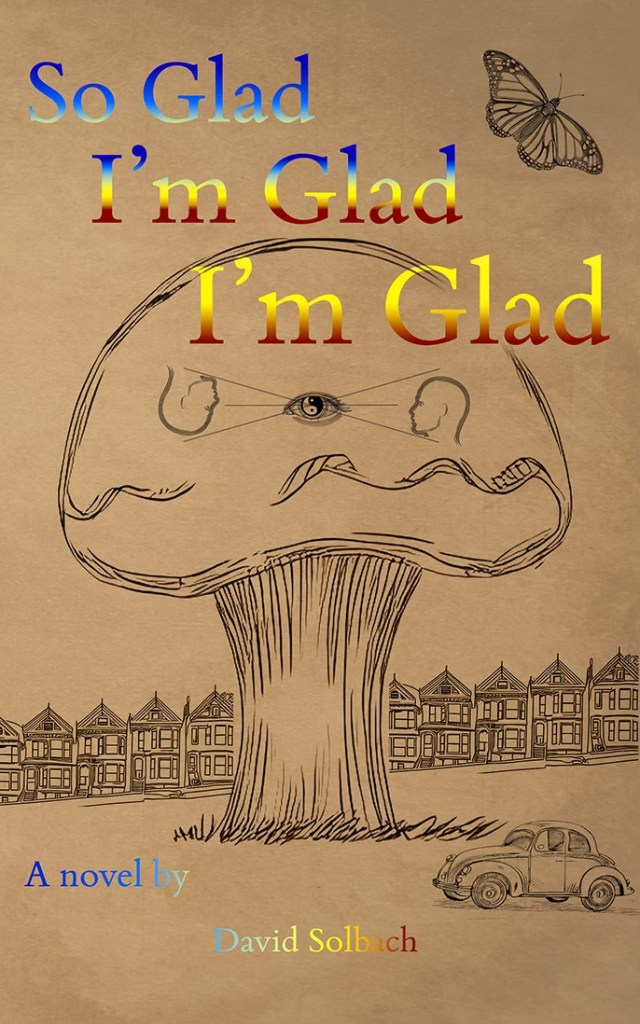
Burney Sundin is an educated young man of the 1960s who is uncomfortable with conventional lifestyles and has settled into San Francisco’s underworld out of attraction for the beat-hipster social experiment percolating in the low-rent Haight-Ashbury district. He enjoys the community of rock-n-roll, drugs, and organic meals, but mystical hedonism leaves him dissatisfied and in need of purpose and income. So he cleans up and lands a job representing a textbook publishing company at colleges in Southern California, trading his VW for a sports car and moving into an apartment with his new girlfriend in Laguna Beach. The job and LSD lead him into a labyrinth of academic intrigue and intellectual posturing, a clash of profit and poetry that ultimately ends his business career, while his girlfriend takes him on a path through insanity to pastures of lucidity.
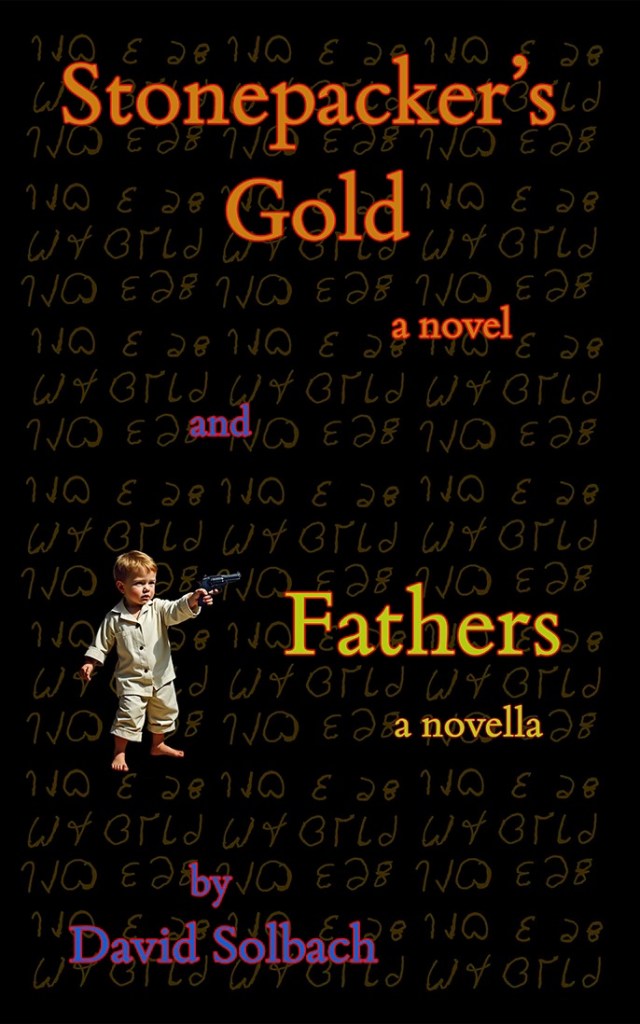
Stonepacker’s Gold is the story of young Willie Urgang’s arrival in Salt Lake City, 1920. Fleeing a bad marriage back home in Kansas, he is quickly drawn into a romance, and through it into a convoluted struggle to obtain a stack of gold plates. So far as the Church of Latter-day Saints is concerned, the plates are worth much more than their weight, because they are rumored to be inscribed with the testimony of a certain Thomas Stonepacker, a contemporary of Samuel Brannan and Brigham Young. The efforts of the Mormons to get the plates are foiled by a wily band of Jesuits intent on publishing the plates if the testimony contradicts Joseph Smith’s revelations, or melting them down if they confirm them. Among the historical figures who mix with fictional ones is Rafael Lopez, who killed several deputies and disappeared into a mine in 1912. His body was never found, and it is revealed that he escaped the mine and had devised a scheme to defraud all the interested parties, including a gaggle of Masons. A faithful translation of Thomas Stonepacker’s gospel is included in the epilogue.
Roger Urgang of Fathers is Willie Urgang’s adoptive great-grandson, a freshly divorced San Francisco stockbroker recently unemployed due to the dot-com bust of 2002. Roger’s father has had a stroke, and needs help managing the Kansas farm on which Roger grew up. Feeling in need of a break, Roger returns to his agricultural roots and establishes a healthy love relationship that is soon rudely interrupted by a kidnapping–followed by questions about the suicide of his biological father, which lead to chilling revelations about his childhood.

These two groups of poems represent opposite ends of a life. Painted Toes and Other Mistakes was begun with the arrival of Covid in the spring of 2020, my seventy-eighth year. So You Bend Silk was completed in the national bicentennial year of 1976, the same year I finished So Glad I’m Glad I’m Glad (a flawed, first novel), and abandoned words for carpentry, then jazz. Forty-three years later, camped in an RV parked near Goliad, Texas, I began the rewrite of So Glad that had eluded me for decades. I also reverted to my old habit of fiddling with poetry as a warm-up exercise for writing sessions, and thus were born the thirty-eight poems that constitute Painted Toes. Looking back on the earlier poems I see a young man with his eyes on eternity and his heart wrapped in delusions. I am too close to the later collection for such a perspective, but I’d like to think that what I’ve lost in virility I’ve gained in humor and empathy for the everyday, that I’ve managed to better conjoin the divine with the obscene in homage to my imminent appointment with the big nothing forever.

This is the story of a Kansas farm boy, a third generation son of German immigrants, growing up in the fifties of Eisenhower, black and white TV, racial and sexual prejudice so ubiquitous, so much a matter of the woodwork, that most white citizens, especially men, were not even aware of it. A reality our character gradually understands as he matures through small town fisticuffs and clarinet lessons to come of age in 1960 as the first of his clan to enter college. He is dubbed the ”teenage gadfly” of his music department, and after his freshman year transfers into the more interesting fields of psychology, English, philosophy, history. Seduces the girl next door, then first tastes the joy of sex with a coed who happens to be black. Graduates in 1965 with a degree in English that will be necessary for no job he will ever hold, though it is useful in several.
He settles in San Francisco doing menial jobs to support his dream of becoming a writer in the context of a beat culture transforming into a hippie revolution to replace the old salvation ethic with a self-realization ethic. Does many and extensive adventures with LSD and becomes a life-long devotee of marijuana. Overcomes his homophobia and confirms that he is hopelessly straight, and falls into the first of many long term relationships that evolve into serial monogamy as a way of life inimical to marriage and parenthood.
He puts on a suit and tie for a couple of years as a college traveler for publishing companies, where he meets several young women with better educations than his own who are stuck, to his embarrassment, behind desks with no career prospects comparable to his own. He uses the publishing experience as the basis for his first novel. The book is rejected for reasons he agrees with; so he learns carpentry, buys and remodels dilapidated properties and in a decade as an urban pioneer works his way up to owning a San Francisco house. He rents out rooms and becomes a taxi-cab driver for several decades. In his early forties he buys himself a clarinet, starts a Celtic Fusion band, turns back to the study of music and becomes a competent jazz musician. Then he returns to writing, eventually rewriting that bad first novel and, in his retirement on the fruits of his real estate investments, completes several more novels and books of poems in addition to this memoir.
 David Solbach — Author